Why Mission Duration Matters for Contact Work
Aithon is built for contact-based work at height: deploying sensors, taking core samples, performing NDT measurements, tasks that require stable positioning and consistent power delivery. Unlike visual inspection drones that capture data in minutes, our missions often involve extended on-station time for measurement grids, multiple tool operations, or waiting for sensor calibration.
Battery-powered flight imposes a hard limit on mission duration. For work that requires complex operation at height, that time constraint becomes the limiting factor not the platform’s capability to perform the work itself.
This is why we’ve been developing a high-voltage tether system: to remove the height and endurance constraint and enable the mission profiles our platform was designed for.
From Heavy Cable to Lightweight Power Delivery
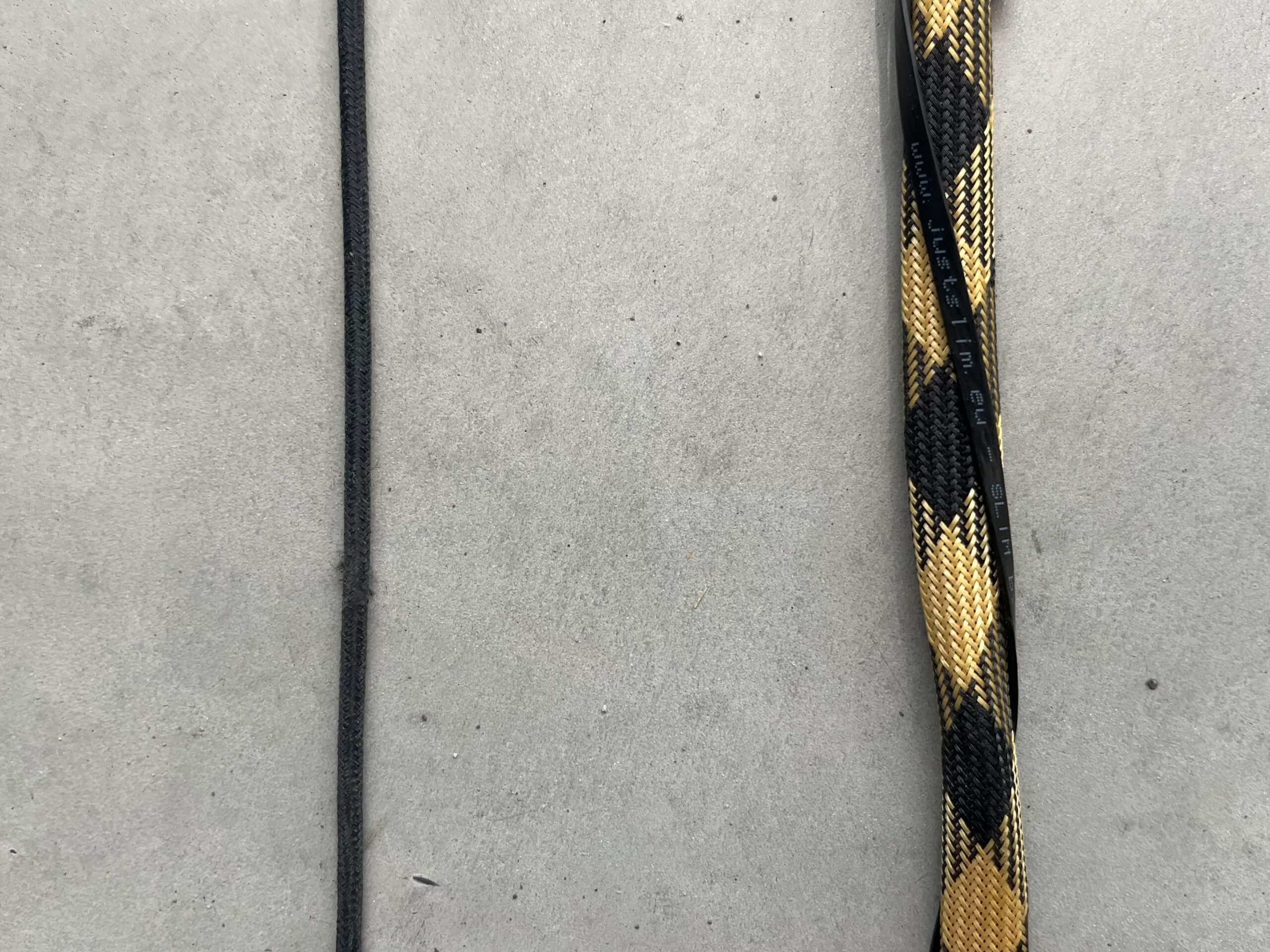
Our first tethered setup proved the concept but came with a critical tradeoff: the cable was roughly 10× heavier than our current system, effectively making the tether the payload. This restricted us to approximately 10 meters of flight height, far below the working altitudes where our contact capabilities deliver the most value.
The new high-voltage system changes this equation. Starting at 6 kW power class, the dramatically lighter cable enables:
- Working heights above 50 meters where many high-value assets live (storage tanks, chimneys, bridges, dam faces)
- Unlimited mission time for extended measurement campaigns and multi-tool operations
- Stable power under load for force-intensive tasks like core drilling
- Fiber optic data link for reliable communication in RF-constrained environments
Validation: From Test Stand to Bridge Deployment
Consistent Tool Performance Throughout the Mission
Contact work demands consistent power delivery. When you’re drilling a core sample at 50 meters or running an NDT scan across a measurement grid, tool performance can’t degrade as the mission progresses. Power fluctuations mean inconsistent measurements, aborted drilling operations, or incomplete data sets exactly the outcomes that force you to return to site and incur access costs twice.
Our high-voltage system maintains stable voltage delivery regardless of load variations. Whether you’re switching between light sensing and high-force drilling, or running extended measurement sequences, your tools perform consistently from start to finish. This means you complete the mission scope in one deployment, not multiple attempts.
Site Safety Without Compromise
Here’s what matters for your risk management: if power is lost during a mission, the system lands safely without operator intervention.
This isn’t about our engineering it’s about your site safety protocols. When you’re operating over active infrastructure, near public spaces, or in controlled industrial environments, an uncontrolled descent isn’t just a platform failure, it’s a site incident, a safety report, and potentially halted operations.
We’ve validated automatic transitions to backup batteries during sudden power loss. This means your safety officer can approve deployments knowing the system has a back up if the tether fails. No emergency procedures required from your operators, no reliance on quick reactions, just a regular flight to the ground.
Field Reality: 50-Meter Bridge Testing
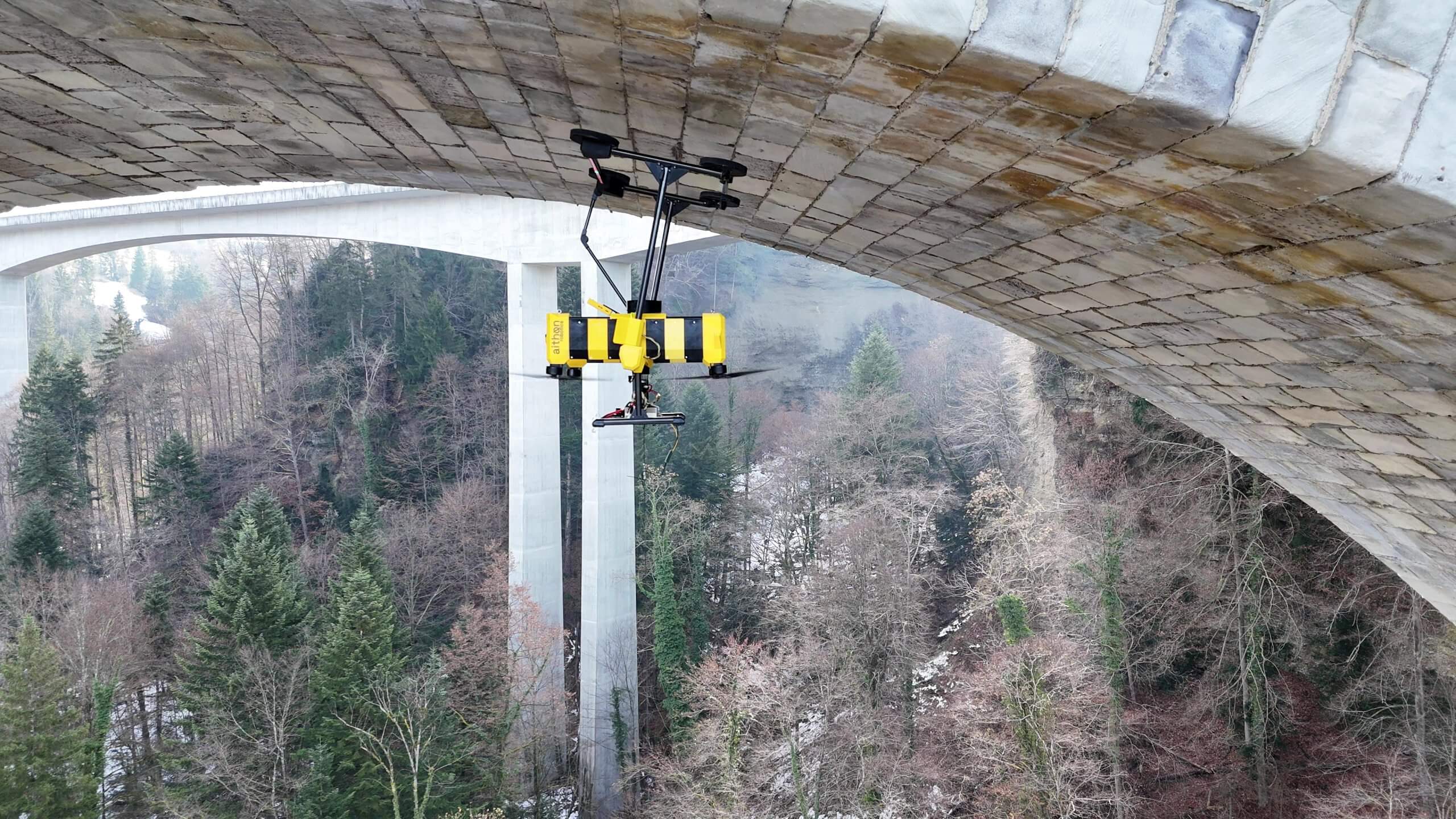
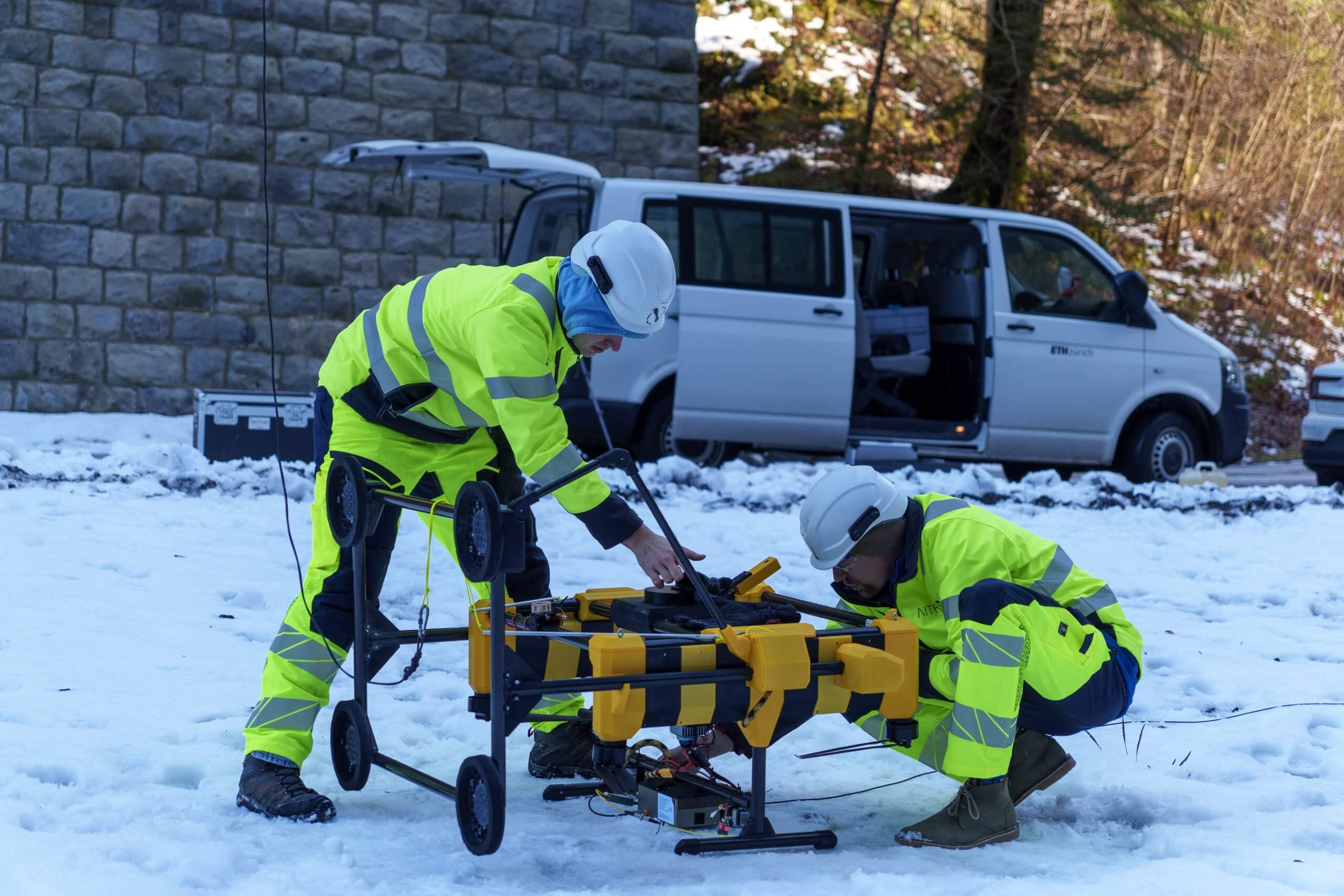
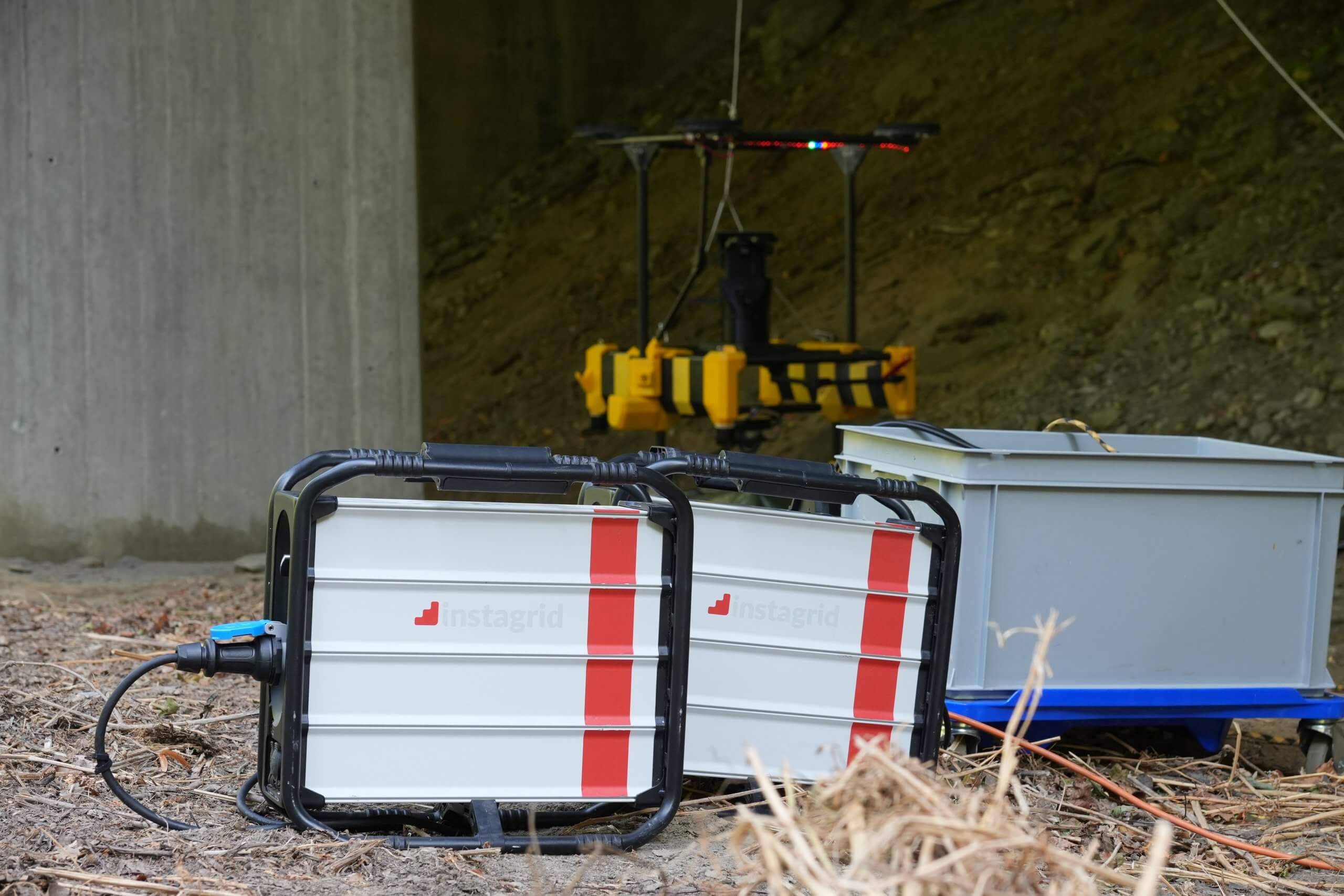
Our first field trial deployed on a ~50-meter high bridge. We ran multiple missions with varying payloads and deliberately positioned the ground unit up to 30 meters away to stress-test cable handling and flight behavior.
Results: Stable flights, predictable cable dynamics, and system performance that validated our integration approach.
Learning Through Iteration
On subsequent testing, we identified intermittent connection issues traced to fiber routing inside the airframe. The likely cause: insufficient cable guidance creating stress on the optical link during flight maneuvers.
This is exactly why we test: to find the integration details that determine whether something works every time, not just once. We’re refining the routing design and continuing validation.
Moving Forward
This tether integration expands the operational envelope for contact-based aerial work. With lightweight high-voltage delivery, we can reach the working heights where our perching and tooling capabilities solve real access problems and stay on station long enough to complete the mission.
Ready to Inspect at Height?
Inspecting storage tanks, chimneys, bridges, or dams? If your assets reach 20+ meters and traditional access is challenging or costly, Aithon One delivers contact-based inspection and intervention at the altitudes that matter.
Join our early adopter program. We’re partnering with operators who need reliable contact work at significant heights. Work directly with our engineering team to validate your specific use cases and help shape the future of work-capable aerial robotics.